

Seeing Machines wins mirror-based monitoring deal in Europe
Thu, 23rd Jul 2026
Seeing Machines has won a new driver and occupant monitoring system programme with a European automotive manufacturer through an existing Tier 1 customer. The deal is expected to generate about USD $5 million in lifetime revenue.
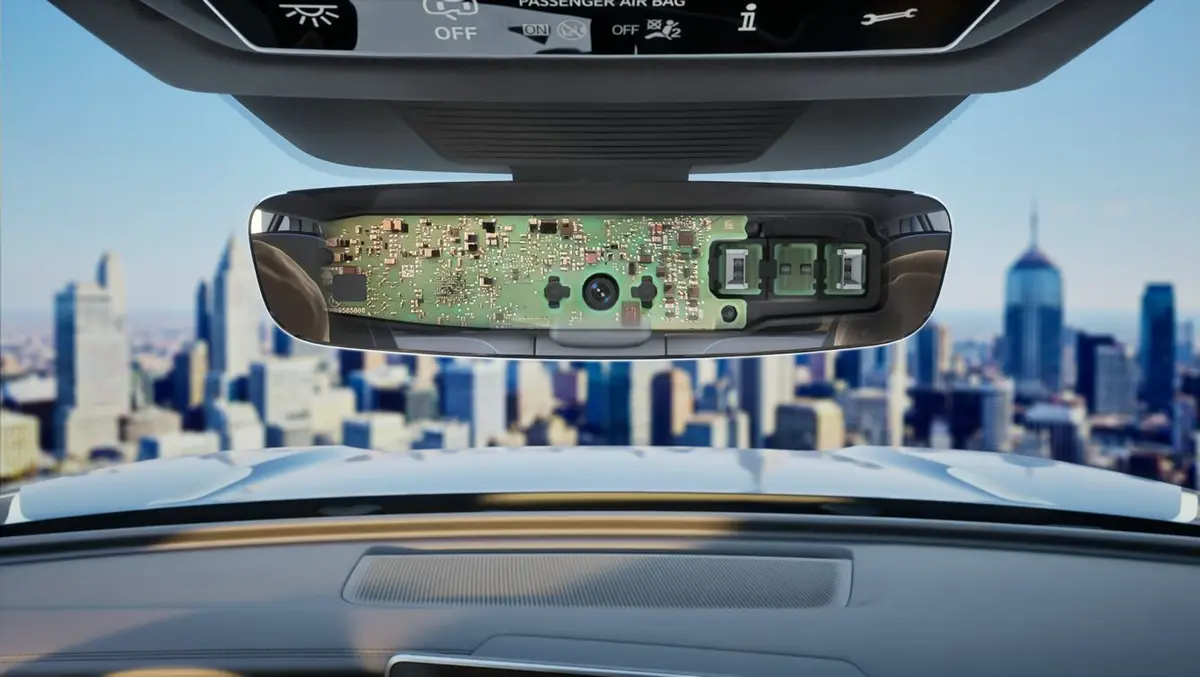
Its technology will be built into a rear-view mirror system for future vehicle platforms, including electric models, with production expected to begin in 2028.
The award comes as the European Union's General Safety Regulation requirements for driver monitoring technology take effect, marking a shift towards wider use of camera-based in-cabin safety systems designed to reduce distraction and improve road safety.
The new programme adds to Seeing Machines' automotive production pipeline. The Canberra-headquartered company develops vision-based monitoring systems that track where a driver is looking and assess driver state to identify accident risk.
Mirror integration
In this programme, the system will be integrated into the rear-view mirror rather than deployed as a standalone component elsewhere in the cabin. That approach allows carmakers to use a common design across several vehicle lines while limiting additional engineering work.
The arrangement also highlights how suppliers are adapting products to meet regulatory changes in Europe. Carmakers selling into the region face growing pressure to add driver monitoring functions as safety rules tighten.
Seeing Machines operates across automotive, commercial fleet, off-road and aviation markets, but the latest contract is focused on passenger vehicles. The customer was not named, though the award came through an existing Tier 1 relationship.
Automotive manufacturers have been steadily adding more in-cabin sensing systems as regulators and consumers place greater emphasis on safety features that monitor fatigue, distraction and attention. Mirror-based installations are emerging as one path to wider deployment because they can be incorporated into vehicle architecture with less redesign than some dashboard-based alternatives.
Chief Executive Officer Paul McGlone commented on the award and the wider market backdrop.
"This latest award reflects the strength of our technology, the confidence our Tier 1 partners and automotive customers continue to place in our solutions, and our leadership position in interior sensing solutions.
Importantly, the award is based on a rear-view mirror integration, an architecture that offers vehicle manufacturers a highly efficient pathway to scale deployment across multiple vehicle platforms. Combined with the introduction of the European Union's GSR requirements earlier this month, we are seeing the industry transition from early adoption to broader deployment of camera-based in-cabin sensing. Seeing Machines is exceptionally well positioned to support OEMs as they accelerate the rollout of these critical safety technologies across their global vehicle portfolios," said McGlone.
Founded in 2000, Seeing Machines is headquartered in Australia and has offices in Australia, the US, Europe and Asia. Its automotive business is part of a broader strategy focused on monitoring vehicle operators in real time through a mix of AI algorithms, embedded processing and optics.
Driver monitoring systems have shifted from a niche safety feature to a more mainstream requirement in several markets, particularly as regulators seek measures that can address distraction and fatigue before they lead to collisions. For technology suppliers such as Seeing Machines, the latest European mandate offers a clearer path to production programmes tied to larger model ranges.
The new award underlines how regulation is shaping procurement decisions across the automotive supply chain, with mirror-based in-cabin sensing emerging as one model for rolling out monitoring functions across both conventional and electric vehicle platforms.