

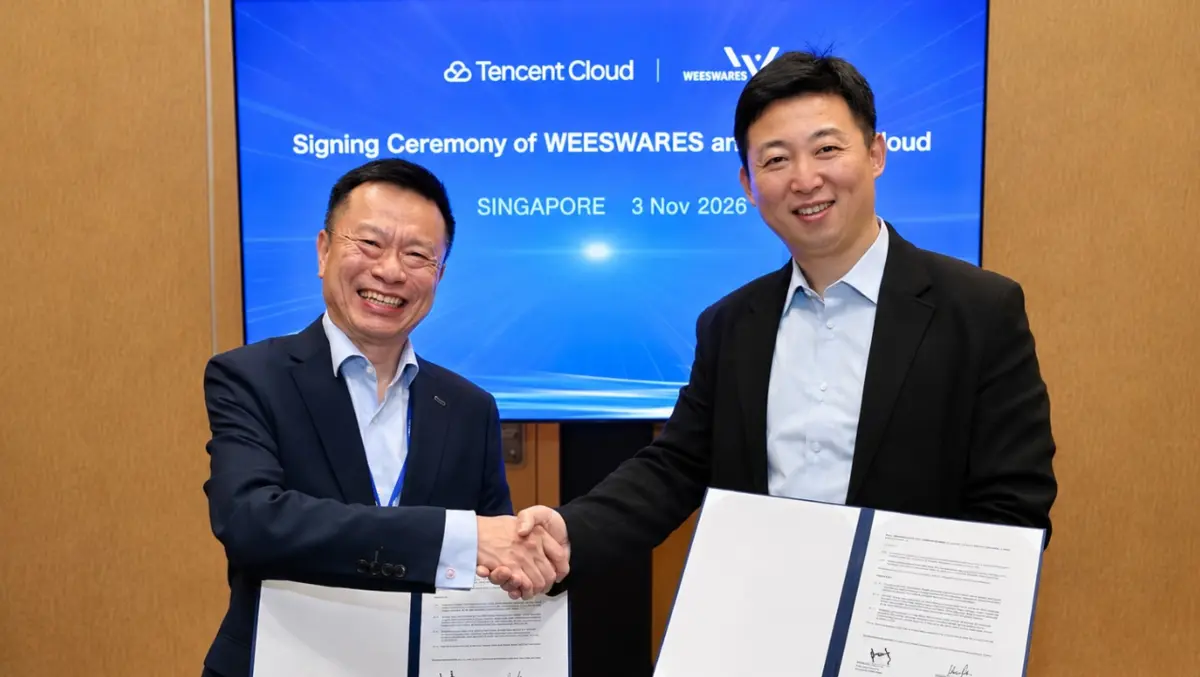
Tencent Cloud brings palm check-ins to Singapore seniors
Wed, 25th Nov 2026 (Today)
Tencent Cloud and WeesWares have introduced palm recognition check-ins for seniors at Active Ageing Centres in Singapore, with more than 10,000 users enrolled.
The partnership brings Tencent Cloud's PalmAI platform into WeesWares' CaritaHub system, which is used at more than 100 Active Ageing Centres in Singapore. Previously, seniors relied on identification cards to check in, and forgotten cards often meant staff had to register them manually.
Users can now check in by scanning their palm. The platform uses palm print and palm vein recognition for contactless identity verification.
Senior care use
WeesWares develops digital systems for senior care and employs more than 60 people. Its CaritaHub platform is certified under Singapore's Ministry of Health Age Well SG programme and combines software and hardware used in community care settings.
The palm recognition function has been rolled out over about a year. During that time, enrolment passed 10,000, giving the system a sizeable user base across centres already using CaritaHub.
For care providers, the change is intended to reduce time spent on routine reception tasks. In settings where older users may misplace or forget cards, biometric check-in can remove a common cause of delays.
Singapore is among several Asian markets facing an ageing population, and care providers have been seeking practical tools that make services easier to access. Community-based centres, in particular, often need systems that can manage regular attendance, service access and records without adding to frontline workloads.
Tencent Cloud said the collaboration reflects growing demand for authentication tools in everyday service settings. Beyond senior care, it positions PalmAI for use in payments, access control, healthcare and retail.
Regional footprint
WeesWares chose Tencent Cloud because its offering combined palm recognition hardware, software and cloud infrastructure in a single setup, while also supporting its wider presence in Southeast Asia. The Singapore company already operates in Myanmar and Indonesia and is expanding into Vietnam and Malaysia.
That regional footprint matters for companies supplying software to care providers across multiple markets, where deployment often depends on a mix of local support and centralised infrastructure. In this case, the palm recognition tool runs on Tencent Cloud's infrastructure services and is integrated into the wider CaritaHub platform.
Bluefin Jiannan Zhao, Vice President and Head of APAC Business at Tencent Cloud, said: "As communities across Singapore continue to embrace active ageing initiatives, technology can play an important role in making essential services more accessible, inclusive and people-centric. We are pleased to collaborate with WeesWares to bring Tencent Cloud PalmAI to community care settings, helping simplify everyday interactions for seniors while reducing administrative burdens on care teams. By enabling staff to spend more time engaging with and supporting seniors, we hope technology can contribute to stronger communities and a better experience for everyone involved."
The collaboration also gives Tencent Cloud a live deployment in a public-facing care environment, where reliability and ease of use are likely to come under close scrutiny. Biometric systems in these settings must work quickly and consistently, especially for older users who may be less familiar with digital tools.
WeesWares plans to expand palm recognition beyond check-ins. The next areas under consideration include rewards redemption and other community service functions delivered through the same platform.
Eric Lee, Business Director at WeesWares, said: "Our goal is to make technology more intuitive and accessible for seniors while helping care providers operate more efficiently. By integrating Tencent Cloud PalmAI into CaritaHub, we have simplified a routine process for thousands of seniors and enabled staff to spend more time on meaningful engagement and care. We look forward to expanding the technology to additional service scenarios as we continue to innovate for the senior care sector."