

Wealth institute targets AI training as Dalio warns advisers
Wed, 7th Oct 2026%201.webp)
The Wealth Management Institute aims to reach 21,000 enrolments in artificial intelligence training for wealth and asset management professionals over the next three years. The target comes as advisers and investors face growing pressure to adapt to changes in decision-making.
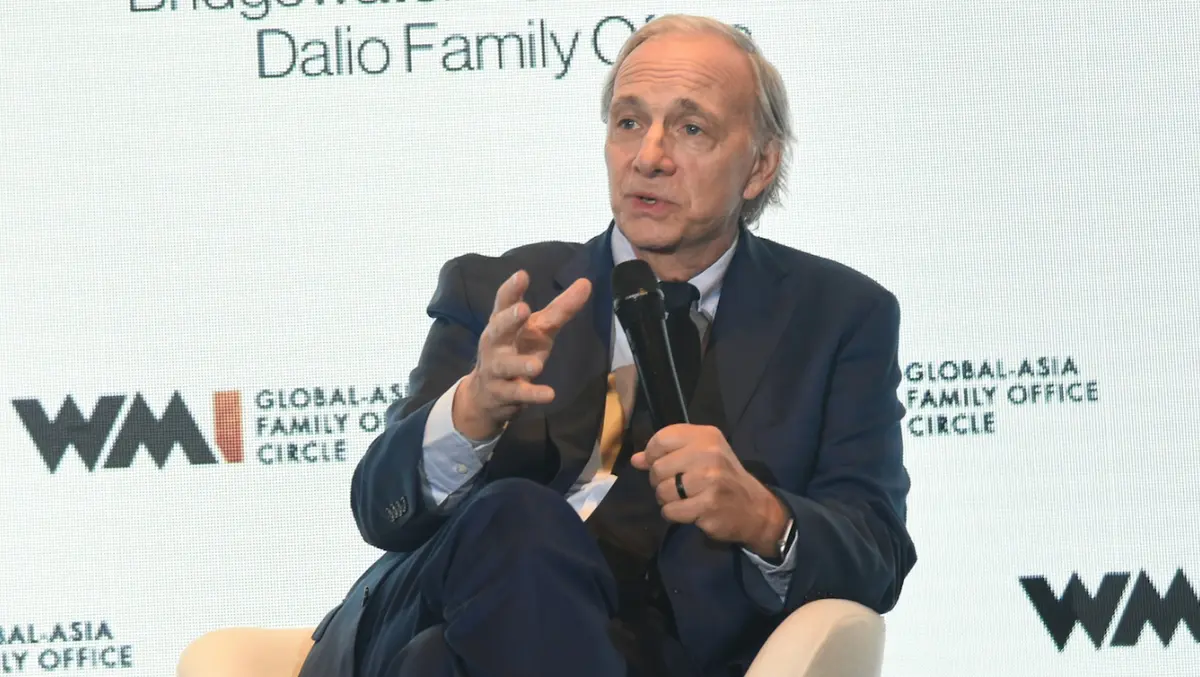
Speaking in Singapore, Ray Dalio warned that advisers who fail to work effectively with AI risk losing their place in the market. WMI said its training will focus on practical, role-specific uses of AI and include guidance on safe and responsible use.
Dalio set out a stark view of the shift under way in investment management.
"You are either going to be on the crest of this AI wave, or you're going to drown under it. This is particularly true in markets, where producing alpha means making decisions that are better than random and better than the competition. Advisers will need to work effectively with AI to remain competitive. You have to get into that game and be able to do it capably. Otherwise, you will be bypassed," said Ray Dalio, Founder of Bridgewater Associates and Chairman of the Dalio Family Office.
He said AI could help across the investment process, from gathering information and setting decision criteria to back-testing, portfolio construction and execution. At the same time, he argued that investors still need to define their own criteria, challenge AI outputs and understand the cause-and-effect relationships behind decisions rather than accept machine-generated answers at face value.
Dalio also described an emerging model in which investors work alongside AI tools shaped by their own values and thinking. His remarks reflect a broader shift in which technology takes over more analytical and routine tasks while final judgement remains with human decision-makers.
Training push
WMI Chief Executive Officer Foo Mee Har said AI is already changing how investment and advisory work is done. Investment professionals can use the technology to review large volumes of research, examine portfolio vulnerabilities and improve risk analysis, she said, though its use also raises questions about confidentiality, bias and oversight.
"AI is already changing how we invest and advise. Investment professionals can use it to synthesise vast amounts of research, explore portfolio vulnerabilities and strengthen risk analysis," said Foo Mee Har, Chief Executive Officer, Wealth Management Institute.
She drew a clear line around responsibility for client advice.
"AI can generate an answer. Advisers remain accountable for the advice," said Foo.
Foo said the balance between automation and personal judgement is changing the value placed on relationship-led work.
"As AI takes on more analysis and routine work, the premium on human connection rises. Advisers who know how to use AI well will be better equipped to thrive-with deeper insights, better preparation and more time to understand family concerns, build trust and strengthen relationships," said Foo.
The institute said the training effort supports a wider industry initiative to prepare the financial sector for changing job roles through training and job redesign. The courses are intended for wealth and asset management professionals and will emphasise direct application in day-to-day roles rather than general theory.
Adviser gap
WMI also used the occasion to highlight findings from a study on family office leadership and decision-making. Conducted with academics from Harvard Business School and the University of Chicago Booth School of Business, the research drew on responses from about 150 family offices, mainly in Asia, and compared them with family offices globally, most of them in the Americas.
One finding was that only 32 per cent of family offices in the mainly Asian sample identified advisers as a source of guidance when considering strategic decisions about wealth and legacy. That rate was about one-fifth lower than in the international sample.
For WMI, the gap suggests advisers may still play a limited role in some family offices when discussions move beyond investment products to broader questions of governance, succession and purpose.
"This points to a significant opportunity for advisers to earn a greater role in families' decision-making. Doing so requires them to understand how a family's investments, governance, succession and purpose connect. It is a capability we must build," said Foo.
Broader agenda
Alongside its AI training target, WMI said it is expanding its work with the Private Banking Industry Group in philanthropy, legacy and purpose. Over the next three years, the two organisations expect 1,200 enrolments from private bankers seeking training to advise families in those areas.
Foo said philanthropy is drawing more attention from advisers because it gives families a practical way to express values through decisions and can involve younger family members in responsibility and governance.
"We are seeing strong interest from advisers in building knowledge in philanthropy. Philanthropy gives families a practical way to put their values into action. It can bring generations together around a shared purpose and give younger members experience in making decisions and taking responsibility," said Foo.