

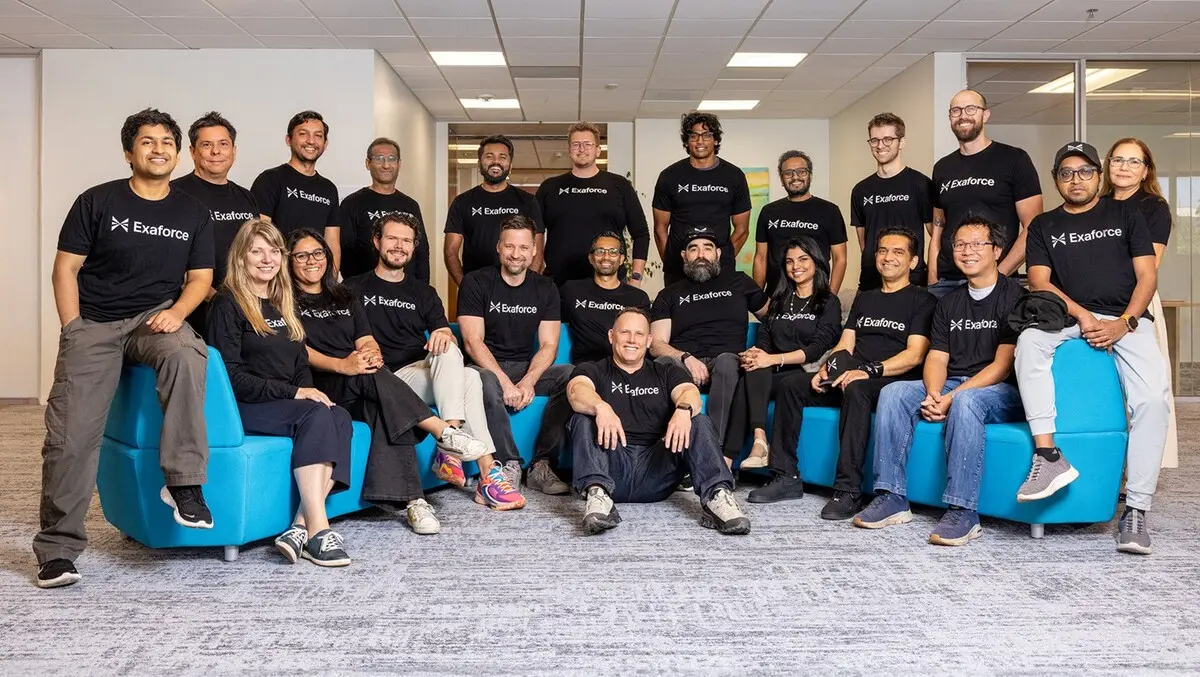
Exaforce raises USD $125m in Series B for AI security
Wed, 13th May 2026
Exaforce has raised USD $125 million in a Series B funding round, bringing the cyber security company's total funding to USD $200 million.
Investors in the round included HarbourVest, Peak XV, Mayfield, Khosla Ventures, Seligman Ventures and AICONIC. The company will use the funds to further develop its platform and expand internationally, including in Japan and Europe.
The fundraising comes as cyber security vendors pitch artificial intelligence systems as a way to manage growing volumes of alerts and faster-moving attacks. Exaforce develops security operations software designed to help teams detect, investigate and respond to threats using live operational data.
The Series B follows a USD $75 million Series A completed a year earlier. That pace places Exaforce among the more heavily funded start-ups in a market focused on applying AI to security operations centres.
Platform approach
Exaforce argues that many AI security operations products still examine alerts only after they have been triggered. Its system is built around what it calls a real-time security knowledge graph, linking data such as events, identities, permissions, configurations, files, code and cloud activity as information enters the platform.
According to the company, this design allows the software to retrieve context that has already been connected rather than reconstructing it during an investigation by querying different systems. Exaforce says that reduces the time and computing cost required to answer security questions and can cut investigation times to under a minute.
It also says the architecture improves reasoning by tying events and resources to established relationships, which it claims reduces false positives and improves the quality of detection and response recommendations. Those claims reflect a wider debate in cyber security over whether AI tools should be layered onto existing systems or built around new data structures from the outset.
"We built Exaforce to be the platform defenders actually work in, not just an AI layer on top of existing tools," said Ankur Singla, Chief Executive Officer of Exaforce. "It starts with a real-time knowledge graph that gives agents complete context from the start, and extends into rich investigation and visualization experiences that put security engineers and AI agents on the same page. This funding lets us deepen that platform and bring it to security teams on a global scale."
Customer uptake
Exaforce says it has grown to more than 130 employees and processed millions of investigations across its customer base over the past year. It also cited demand from organisations in sectors such as healthcare, technology and financial services, where security teams face pressure to handle large volumes of operational data without expanding headcount at the same pace.
One customer cited by Exaforce is Invisible, which uses the company's platform as an AI-native security platform and modern SIEM, with managed detection and response support. Invisible said the system had enabled broader use of its security data across detection, response and automation.
"After actively evaluating several options, we went with Exaforce as our AI-native security platform and modern SIEM, backed by their MDR service for 24/7 expert coverage," said Patrick McKinney, Vice President of Security at Invisible. "What set them apart was the ability to unlock the full value of our data, from enriched event ingestion to detection, response, and automation, all within a single platform. The combination of AI-driven efficiency and the added expertise of their MDR team has helped us scale more effectively without overextending resources. Exaforce feels less like a vendor and more like a true security partner, and we're on a clear path to expanding use cases together."
Guardant Health, a biotechnology company, also said it uses Exaforce's tools to speed up detection, threat hunting, response and investigations while broadening coverage.
"As a biotech company, safeguarding highly sensitive data is a constant priority, especially in a landscape shaped by faster, AI-driven attacks," said Steve Mancini, CISO of Guardant Health. "With Exaforce's Exabots, we've accelerated detection, threat hunting, response, and investigations while expanding coverage without adding headcount. Our team uses Exabot's natural language search to get actionable answers about security events and security posture in a single tool instead of juggling disparate interfaces and query languages. Exaforce has become a high-trust partner, and the platform has transformed how we run security operations."
Investor view
Investors backing the round framed the opportunity in terms of changing the cost balance between defenders and attackers. That argument has become common in cyber security investing, where AI is often presented as a way to automate more of the labour-intensive work inside corporate security teams.
"The biggest opportunity in enterprise security is flipping the economics, so that defenders, not attackers, hold the leverage," said Vinod Khosla, Founder of Khosla Ventures. "When the cost of defense drops by an order of magnitude, the entire calculus of security changes. Exaforce is the architecture that makes that possible."