

Singapore workers outpace global peers in workplace AI
Thu, 18th Jun 2026 (Today)
Microsoft has released its Singapore findings from the 2026 Work Trend Index, showing workers in the city-state are ahead of global averages in workplace AI use.
The survey found that 66% of AI users in Singapore said they were producing work they could not have created a year earlier, compared with 58% globally. Among what Microsoft described as Frontier Professionals, its most advanced AI users, that figure rose to 82%.
At the same time, 88% of AI users in Singapore said they remained responsible for the thinking when using AI, slightly above the global benchmark of 86%.
The data also pointed to a gap between individual adoption and organisational support. While 78% of AI users in Singapore said they recognised the need to adapt quickly with AI, only 24% said leadership was clearly and consistently aligned on AI, below the 26% global figure.
Another 48% said they focused on current goals rather than redesigning work with AI, suggesting companies have room to support more experimentation and new ways of working.
Adoption gap
The findings indicate that employee use of AI in Singapore is moving faster than company systems and management structures. Microsoft cast this as a challenge for employers trying to turn individual use into broader changes in workflows, decision-making and incentives.
Critical thinking emerged as the top skill Singapore workers considered most important as AI becomes more embedded in work, cited by 52% of respondents. This points to the continued importance of human judgement even as AI tools become more common.
Singapore also ranked second globally on Microsoft's AI Diffusion Index, which measures the spread of AI use. That ranking, together with the survey data, suggests AI is already widely used among knowledge workers in the market.
Across the global research, organisational factors such as culture, manager support and talent practices accounted for twice the reported AI impact of individual effort alone. Singapore reflected that broader pattern, with added urgency because of the pace of employee uptake.
Microsoft presented Frontier Professionals as an early indicator of how work may change as AI takes on more execution tasks. In that model, workers spend less time completing tasks and more time setting direction, judging quality and taking responsibility for outcomes.
Manager effect
The survey showed marked differences between advanced AI users and other workers in the role of managers. Frontier Professionals in Singapore were more likely than their non-Frontier peers to say their managers openly used AI, created space for experimentation and encouraged more ambitious redesign of work.
According to the survey, 87% of Frontier Professionals said their managers openly used AI, compared with 72% of non-Frontier workers. On creating space for experimentation, the figures were 81% versus 63%. On encouraging more ambitious work redesign, they were 82% versus 76%.
Those gaps suggest managerial behaviour may be an important factor in how quickly workers adopt AI in more advanced ways. They also strengthen the argument that broader business value will depend as much on leadership signals as on staff willingness to use the tools.
The study covered 20,000 full-time employed or self-employed knowledge workers who use AI at work across 10 markets in Asia Pacific. It surveyed 2,000 full-time workers in each market, with global figures aggregated across all responses.
Singapore was included alongside China, Hong Kong, Indonesia, Malaysia, the Philippines, South Korea, Taiwan, Thailand and Vietnam. Edelman Data x Intelligence conducted the survey online.
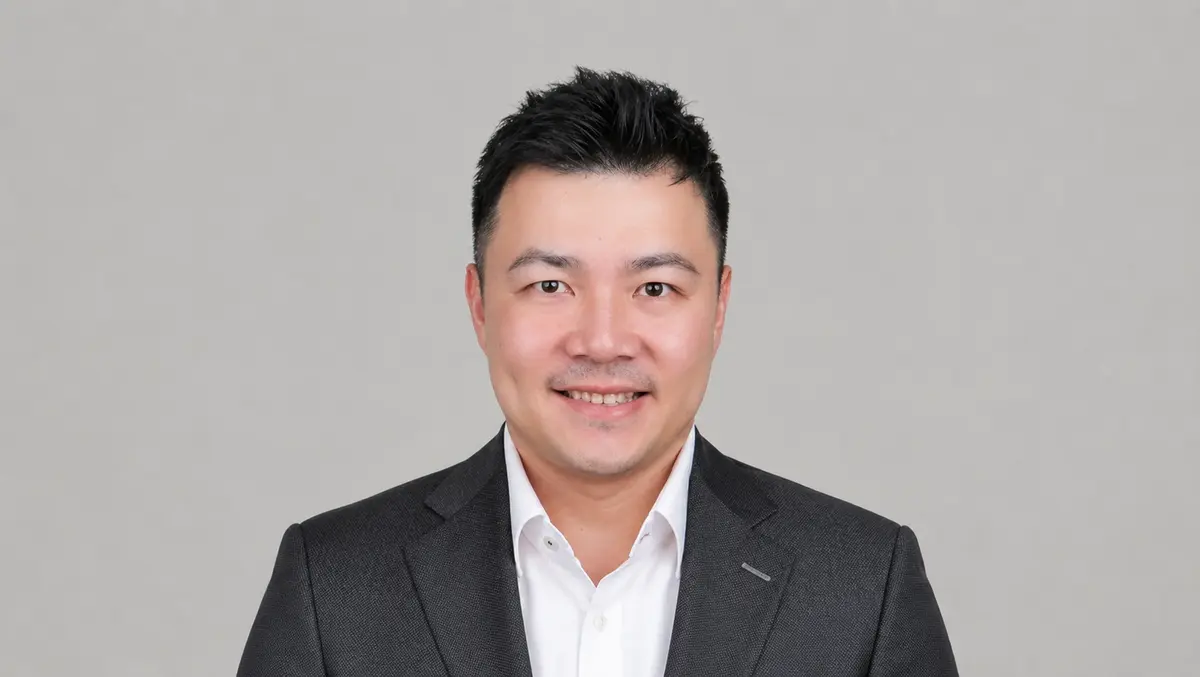
Wee Luen Chia, Managing Director, Microsoft Singapore, said the findings showed both strong employee readiness and a need for stronger organisational follow-through.
"Singapore's workforce is among the most AI-ready in the world, with employees already using AI to unlock new ways of working while keeping human judgment at the centre," Chia said. "The opportunity now is for organisations to reinforce that momentum with clearer leadership alignment, stronger managerial signals, and operating models designed for reinvention. When that happens, AI becomes a catalyst for better decisions and sustainable advantage."